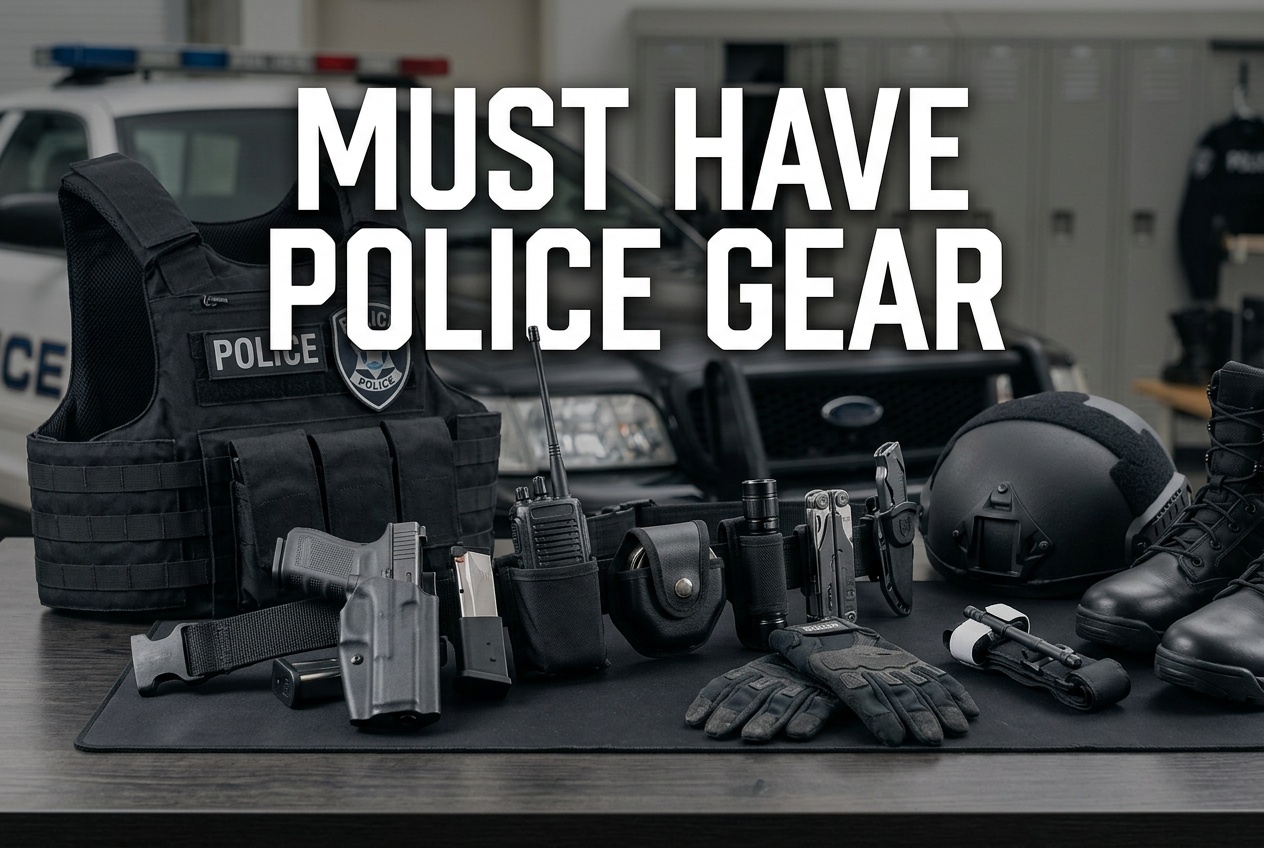
If you’re new to the badge or a few years deep and looking to upgrade your kit, this is a straight-shooting rundown of the police gear that earns its spot on a duty belt. We’ll cover what departments issue, what officers buy on their own dime, and what separates working law enforcement equipment from gimmicks that end up in a desk drawer. No fluff, no sponsor talk, just the gear that holds up across a twelve-hour shift.
Why Does Quality Police Gear Matter More Than Ever?
The job has gotten more complicated. Calls run longer, scrutiny runs higher, and the stuff hanging off your belt has to perform when seconds matter. Cheap gear doesn’t just fail. It fails at the worst possible moment, usually with a camera rolling. Spending a little more on solid duty gear up front saves money, embarrassment, and sometimes skin.
Modern policing also blends patrol work with skills that used to belong to SWAT. Active shooter response, medical interventions, and crowd management all bleed into the daily duties of a regular law enforcement officer. The kit has to keep up. That means thinking about your gear as a complete toolkit instead of a collection of items you grabbed from Galls during academy.
What Are the Absolute Must-Have Items for Patrol?
The non-negotiables haven’t changed much in fifty years. A reliable duty weapon, spare magazines, a quality holster, handcuffs (two pairs, minimum), a flashlight, a portable radio, and pepper spray cover the bare minimum on the duty belt. An ASP or similar collapsible baton rounds out the impact options for officers in jurisdictions that authorize them.
Body armor is the other piece nobody skips. Most departments issue a Level IIIA soft vest as standard, with the option to add hard plate carriers and ballistic plates for high-risk calls. Some agencies are also pushing helmet purchases for active shooter response, which is smart given how many critical incidents start without warning. If your department doesn’t issue a rifle-rated plate carrier, buying one personally is one of the better investments you can make.
The third leg is your patrol bag or duty bag. Whatever you call it, this is where backup gear lives. Spare batteries, a notepad, gloves, paperwork, citation books, and the smaller items that don’t fit on the belt all ride together. A bag with MOLLE webbing on the outside lets you customize as your needs change.
What Police Gear Is Worth Buying on Your Own?
Issued gear covers the basics. Personally purchased gear is where you actually get comfortable. Cargo pants in royal blue or black (depending on your uniform) from a brand like 5.11, Vertx, or Blauer feel and fit better than most government-issue pants. The pocket layout makes a real difference when you’re trying to find a pen at 3 a.m.
A good flashlight tops nearly every officer’s personal-purchase list. Streamlight and SureFire dominate for a reason. Get one with a rechargeable battery system and at least 1,000 lumens, plus a smaller backup light for your pocket. You’ll use a flashlight more than your firearm, even on day shift, because checking VINs, reading paperwork, and clearing dark corners never stops.
Tactical gloves are another no-brainer. Mechanix and Hatch make models with knuckle protection and decent dexterity. Pat-downs, evidence handling, and breaking glass on a wreck are all easier and safer with proper gloves. Throw a pair of cut-resistant search gloves in your pouch for handling unknown subjects.
Why Is a First Aid Kit One of the Most Important Pieces of Protective Equipment?
The data here is brutal and clear. Officers and citizens die from treatable injuries when nobody on scene has the right gear. An individual first aid kit, often called an IFAK, is essential gear, not optional. It’s protective gear for the person you’re saving, including yourself.
A working IFAK includes at minimum two tourniquets (CAT or SOFTT-W, not the cheap knockoffs from Amazon), hemostatic gauze like QuikClot or Combat Gauze, a pressure bandage, chest seals, and a pair of nitrile gloves. Train with it. A tourniquet you’ve never applied under stress might as well be a paperweight. Most departments now run TCCC-style training for first responders, and if yours doesn’t, sign up for an outside class.
Gunshot wounds aren’t the only use case. Car wreck victims, industrial accidents, and dog bite calls all benefit from someone on scene with bleeding control supplies. A first aid kit pays for itself the first time you use it, even if you never touch it for a shooting.
What About a Body Camera and Other Recording Equipment?
The bodycam debate is over. They’re standard equipment now, and most officers who were skeptical at first ended up grateful. A BWC protects you from false complaints far more often than it hurts a clean officer. Departments running Axon, Motorola, or similar systems have data showing complaint rates drop sharply once cameras are deployed.
If your agency lets you choose mounting options, experiment. Magnetic mounts, MOLLE clips, and chest harnesses all have trade-offs depending on whether you wear an external vest carrier or tuck your armor under your shirt. The angle matters. A camera pointed at the sky during a foot pursuit is useless evidence.
Backup recording habits matter too. Many officers carry a small audio recorder as redundancy, especially during interviews. Phones work, but personal phones come with discovery headaches. A dedicated department-approved device is cleaner.
What Tactical Gear Should Patrol Officers Carry Beyond the Basics?
This is where personal preference and assignment start to drive choices. Patrol officers in rural areas often carry breaching tools, extra water, and a heavier medical kit because backup is twenty minutes out. Urban officers prioritize lighter loadouts because they’re hopping in and out of the car constantly.
Useful additions for most patrol assignments include a window punch and seat belt cutter (keep one within reach of the driver’s seat), a multitool like a Leatherman, a small pry bar, and a notebook with a Rite in the Rain cover. A spare set of handcuff keys hidden somewhere on your person has saved more than a few officers from bad situations. Some carry a backup gun in an ankle holster or in their vest carrier, which is a personal call based on your department’s policy.
Cold weather and rain gear deserve a mention because nothing kills situational awareness faster than being miserable. A waterproof shell, insulated gloves, and a beanie that fits under your duty cap turn winter shifts from suffering into manageable work.
How Do You Choose the Right Body Armor and Plate Carriers?
Most agencies issue Level IIIA soft armor that stops common handgun rounds. That’s adequate for routine patrol but useless against rifle threats. Adding a plate carrier with rifle-rated plates (Level III or IV) for high-risk calls has become standard practice. Many officers keep a “go bag” plate carrier in the trunk for active shooter response.
Fit matters more than people realize. Body armor that rides up when you sit, sags when you run, or pinches under the arms is armor you’ll find excuses not to wear. Get measured properly, and if the issued vest doesn’t fit, push your supervisor to order a replacement. A bulletproof vest doesn’t help if it’s hanging in your locker.
External carriers have replaced traditional under-shirt vests in many departments. They distribute weight better, dry faster after a sweaty shift, and let you mount pouches for radio, mags, tourniquets, and other duty accessories. The downside is appearance. Some departments still want the traditional clean-uniform look, especially for community-facing assignments.
Are Specialty Items Like Helmets and Breaching Tools Worth It?
For SWAT and tactical teams, absolutely. For regular patrol, it depends on your jurisdiction’s response protocols. A ballistic helmet and rifle in the trunk turn a solo patrol officer into a meaningful first response to an active shooter, instead of someone waiting for the team to arrive.
Departments are slowly catching up. More agencies now issue patrol rifles, helmets, and rifle-rated armor to every patrol officer rather than reserving that gear for specialty units. If yours hasn’t, document the gap. Personal purchases of critical equipment are common, and reputable manufacturers offer law enforcement discounts that make the cost manageable.
Training equipment matters here too. Owning gear without training on it is theater. Get to a low-light shoot, a vehicle CQB course, or a TCCC class at least once a year. Skills perish faster than gear does.
What Are the Latest Technological Advancements in Police Equipment?
Technological advancements have changed what’s possible on patrol. License plate readers, drone deployment, less-lethal options like the Taser 10, and integrated camera and radio systems have all moved from specialty toys to common-issue tools in the past few years. Officer safety has measurably improved as a result.
Communication gear has come a long way too. Modern protective systems pair Bluetooth earpieces with portable radio rigs that don’t tangle in your seatbelt. Bone-conduction headsets free up your ears for situational awareness while still letting you hear dispatch. These small upgrades change how you work in real ways.
The flip side is information overload. More data, more cameras, and more reporting requirements eat into the time you actually have on the street. Stay critical about which gadgets actually help your law enforcement operations and which just create more paperwork.
Where Should You Buy Your Gear?
Galls, LA Police Gear, and Botach handle the bulk of police supply needs for most officers. They run frequent sales, carry police tactical gear from every major brand, and have decent return policies. Local uniform shops often offer fitting services that online retailers can’t match, which is worth the slightly higher price for vests and pants.
For specialty items, going direct to the manufacturer often saves money and gets you better warranty support. Streamlight, Safariland, Blauer, and Mechanix all have law enforcement portals with verified-officer pricing. Skip the random Instagram “tactical” brands. Stick with manufacturers that have actual track records in the field.
Used gear is risky for armor and helmets because you can’t verify their history. For pouches, bags, lights, and pants, the secondary market is fine and saves real money on quality items.
Final Thoughts Before You Build Out Your Loadout
Start with the basics, buy quality once, and add specialty gear as your assignment demands. The officer with the lightest functional kit usually outperforms the one carrying every gadget on the market. Your duty belt should be a deliberate setup, not a wishlist.
Train with everything you carry. Replace consumables before they expire. And remember that no piece of police gear substitutes for good tactics, sharp situational awareness, and the partner watching your back.
Quick Reference Checklist
- Duty weapon, holster, two spare magazines, and at least two pairs of handcuffs on your duty belt
- Body armor (Level IIIA minimum), with rifle plates and a plate carrier in the trunk for serious calls
- Quality flashlight (1,000+ lumens) plus a smaller backup
- Pepper spray and an ASP or department-approved baton
- IFAK with two tourniquets, hemostatic gauze, chest seals, and gloves
- Portable radio with a working earpiece and spare battery
- Tactical gloves and search gloves
- Bodycam mounted at the right angle for clean footage
- Cargo pants in royal blue, black, or whatever your department dictates, from a brand built for the work
- Patrol bag with MOLLE webbing for backup gear, paperwork, and consumables
- Cold and wet weather gear that fits under or over your vest
- Annual training on every piece of critical equipment you carry
- Honest evaluation every six months of what you actually use versus what just adds weight
