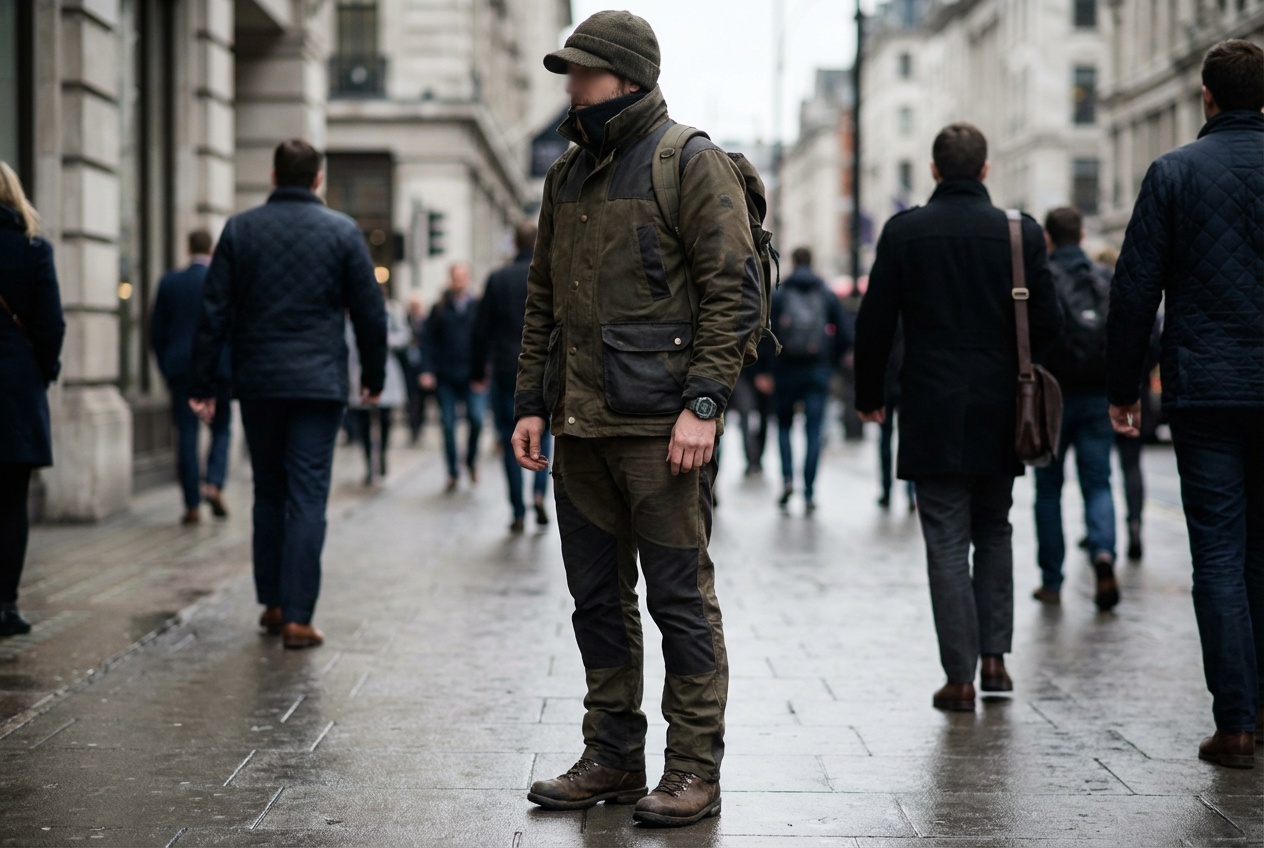
TL;DR: Grey man theory is the practice of blending into your environment so you can move through a crowd of people without attracting attention — especially during a crisis. A “grey man” looks average, carries discreet gear, and stays prepared while remaining invisible. It’s a survival philosophy rooted in military culture that anyone can adopt to stay safe.
Grey man theory sounds like something from a spy novel. Except it’s not. It’s a practical set of skills and tactics used by military personnel, survivalists, PMC’s, social engineers, and everyday people who want to stay under the radar. This article breaks down the grey man concept from top to bottom; what it means, why it matters, how to dress, what gear to carry, and how to develop that mental edge that will keep you alive.
Whether you’re new to preparedness or a seasoned prepper looking to refine your gray man approach, this guide covers everything you need to know.
What Exactly Is Grey Man Theory?
At its core, grey man theory is simple. You want to look, act, and move like everyone else around you. The goal is to remain unnoticed in any environment — whether you’re walking through a busy city street or evacuating during an emergency situation.
The term “grey man” (or “gray man” in American English) describes someone who appears completely ordinary. They don’t stand out from the crowd. They don’t trigger second glances. But beneath that unremarkable exterior, they’re fully equipped to handle whatever comes their way.
This man concept has roots in military training. In special operations selection courses, the grey man is a candidate who never fails but never draws unnecessary attention. They meet every standard quietly. Instructors barely notice them. That’s entirely by design.
Why Does Gray Man Theory Matter for Survival?
Gray man theory matters because visibility can become a liability. During an emergency, most people will be unprepared. They’ll panic. They’ll scramble. And they’ll look for anyone who seems to have their act together.
If you’re carrying a loaded pack and wearing clothing and gear that screams “I’m ready for the apocalypse,” you will draw attention. That attention could make you a target. Desperate people do desperate things. Your level of readiness — the very thing keeping you safe — could become the reason someone tries to take what you have by force.
By adopting gray man tactics, you add a layer of protection. You can move through chaos without drawing attention to yourself. You protect your family and your supplies simply by looking like everyone else. In a true crisis, this approach could save your life.
How Do You Build a Gray Man Appearance?
Your appearance starts with clothing and accessories. The first rule is straightforward: observe the way people dress in your area and match it. You want to blend, not impress.
Avoid bright colors. Colors like red, orange, and yellow are attention magnets. Stick to neutral tones — colors like black, gray, brown, tan, and navy. These shades let you disappear in plain sight in most urban and suburban settings. Nothing flashy. Nothing memorable.
Keep jewelry and personal items minimal. Expensive watches, designer sunglasses, and branded merchandise all attract unwanted attention. A true gray man removes anything that gives people a reason to look twice. You want to be the person no one remembers seeing five minutes later.
What Clothing and Gear Should a Grey Man Avoid?
This is where a lot of people trip up. They invest in tactical clothing, MOLLE-covered packs, and combat boots — then wonder why people stare. If your outfit looks like you just stepped off a military base, you are not blending in. You’re a walking billboard.
Avoid tactical pants with excessive cargo pockets and reinforced knees. Skip overt tactical gear when you’re trying to go unnoticed. These items signal training and preparedness to anyone paying attention. Instead, choose functional pieces that look ordinary. Dark jeans, plain hooded sweatshirts, and simple sneakers offer features and flexibility without drawing the wrong kind of looks.
The same rule applies to bags. A MOLLE-covered tactical backpack screams “prepared.” A standard-looking backpack in a neutral color fits right in. Your bug out bag should be functional but forgettable. Pack what you need to survive inside something no one would glance at twice.
What Is the Right Gray Man Gear to Carry?
The right gear is all about function hidden behind a boring exterior. You want the same level of readiness as any serious survivalist — just packaged in a way that keeps you invisible.
Choose a plain backpack with enough capacity for your essentials. Avoid external MOLLE webbing and military-style clips. Internal organization matters more than external flash. A school-style or commuter-style bag works perfectly for this purpose.
Body armor is another consideration. Concealable body armor worn under a regular shirt gives you a serious edge without tipping anyone off. Several companies now make soft armor panels that fit inside everyday bags, too. This kind of discreet protection is a hallmark of the gray man lifestyle.
For concealed carry, the same principle holds. Your firearm should be completely hidden. No printing through your shirt. No visible holster clips. No gun-brand merchandise that hints at what you’re carrying. The art of being a gray man extends to every piece of equipment on your person.
How Does the Grey Man Mindset Work?
Gear only gets you halfway there. The mental component — what separates someone who looks average from someone who actually disappears — is just as critical.
Situational awareness sits at the center of this approach. You must be constantly aware of your surroundings without appearing alert. That means scanning, observing, and processing information while maintaining a calm, relaxed demeanor. Don’t stare. Don’t react visibly to threats. Don’t walk with purpose that signals you know something others don’t.
Body language matters enormously. Walk at the pace of the crowd. Mirror the posture and energy of the people around you. If everyone is shuffling along looking confused, do the same — even if you know exactly where you’re going. The grey man watches the way people dress and act, then mirrors it. This is the man philosophy in action: adapt to the baseline behavior of your environment so thoroughly that you vanish into it.
Emotional control is part of this equation, too. In a crisis, fear and adrenaline will push you to move fast, look around frantically, and break from the crowd. A grey man resists that urge. You adapt and overcome the stress response so your behavior stays consistent with the people around you.
Can You Really ‘Disappear’ Into Any Crowd?
Yes — but it takes practice. Being able to ‘disappear’ requires reading the room and adjusting everything about your external presentation in real time. That’s not easy. It demands deliberate effort.
Start by studying baseline behavior wherever you go. What are people wearing? How are they moving? What’s the average age, dress code, and energy level? Once you establish the baseline, your job is to match it as closely as possible. Blending into the crowd means becoming forgettable — the person no one can describe after the fact.
A change of clothes can be a powerful tool here. If you’re evacuating through different neighborhoods or environments, what works in one area may stand out in another. Carrying a lightweight extra layer or a reversible jacket gives you the ability to shift your appearance on the fly. You’ll be able to move more quickly through different zones because you look like you belong there.
What Role Does a Gray Man Strategy Play in Personal Security?
This approach is fundamentally about staying safe. Every tactic — from clothing selection to emotional control — serves one purpose: keeping you safe by keeping you invisible.
In an emergency, being noticed can become a threat. If others identify you as prepared, you become a target for those scrambling to find resources. Some will ask for help. Others may try to take what you have. By mastering the art of the art of blending in, you reduce that risk dramatically. You can move through a crowd and increase your chances of reaching safety because no one perceives you as a threat or an opportunity.
This extends beyond disaster scenarios. This philosophy has practical applications for everyday safety. Traveling through unfamiliar cities. Walking through high-crime areas. Avoiding confrontation in volatile situations. These tactical strategies keep you safer by keeping you overlooked.
What Are Common Mistakes People Make With the Grey Man Approach?
The biggest mistake is overthinking it. Some people obsess over every detail and end up looking strange because they’re trying too hard. Irony at its finest. The entire point is to look natural — and that means relaxing into it.
Another common error is relying entirely on equipment. You can wear perfect clothing and still stand out if your behavior is off. Walking against the flow of foot traffic, checking your phone with obvious urgency, or carrying yourself with military bearing will all send attention your way — regardless of what you’re wearing. The grey man who succeeds nails both the external and internal elements.
People also tend to forget context. A grey man in downtown Manhattan looks nothing like one in rural Montana. You must match your environment specifically. There’s no universal uniform. What works is whatever makes you invisible in your particular setting. If you blend into the local baseline, you’re doing it right.
Is the Gray Man Concept Just for Preppers?
Not at all. While the concept is heavily discussed in survivalist communities, its applications are far broader. Law enforcement and intelligence professionals use grey man principles for undercover work. Social engineers use them to infiltrate buildings during security testing. Travelers use them to avoid being targeted as tourists abroad.
The concept applies to any gray man or woman who wants to move through the world without drawing unwanted attention. You don’t need to be stockpiling freeze-dried food to benefit from learning how to blend into a crowd. The principles — dress to match, control your behavior, carry equipment that doesn’t stand out, stay alert — are universal.
Even in daily life, these strategies and tools can help you avoid trouble without drawing unnecessary attention. Keeping a low profile in an unfamiliar neighborhood. Moving through a protest or large gathering without becoming a focal point. These are practical applications that anyone can use, regardless of their relationship with the preparedness community.
Staying Invisible When It Matters Most
Here’s a quick summary of the key grey man principles to remember:
- A grey man blends in — they look, act, and move like everyone else in their environment.
- Gray man theory is about survival through invisibility — not standing out protects you and your resources.
- Appearance matters — avoid overt gear, bright items, and attention-grabbing accessories. Dress to match your surroundings.
- Your backpack should look ordinary — skip military-style designs. Use a plain bag for your supplies.
- Protective gear should be invisible — if people can see your armor or holster, you’re doing it wrong.
- Mindset is half the battle — practice awareness, emotional control, and behavioral mirroring.
- Context changes everything — there is no universal grey man look. Match your specific environment.
- You don’t need to be a prepper — grey man principles work for travelers, professionals, and everyday people.
- Practice regularly — the ability to vanish into any setting is a skill that improves with repetition.
- This approach can protect you — when you stay invisible, you stay safe.
